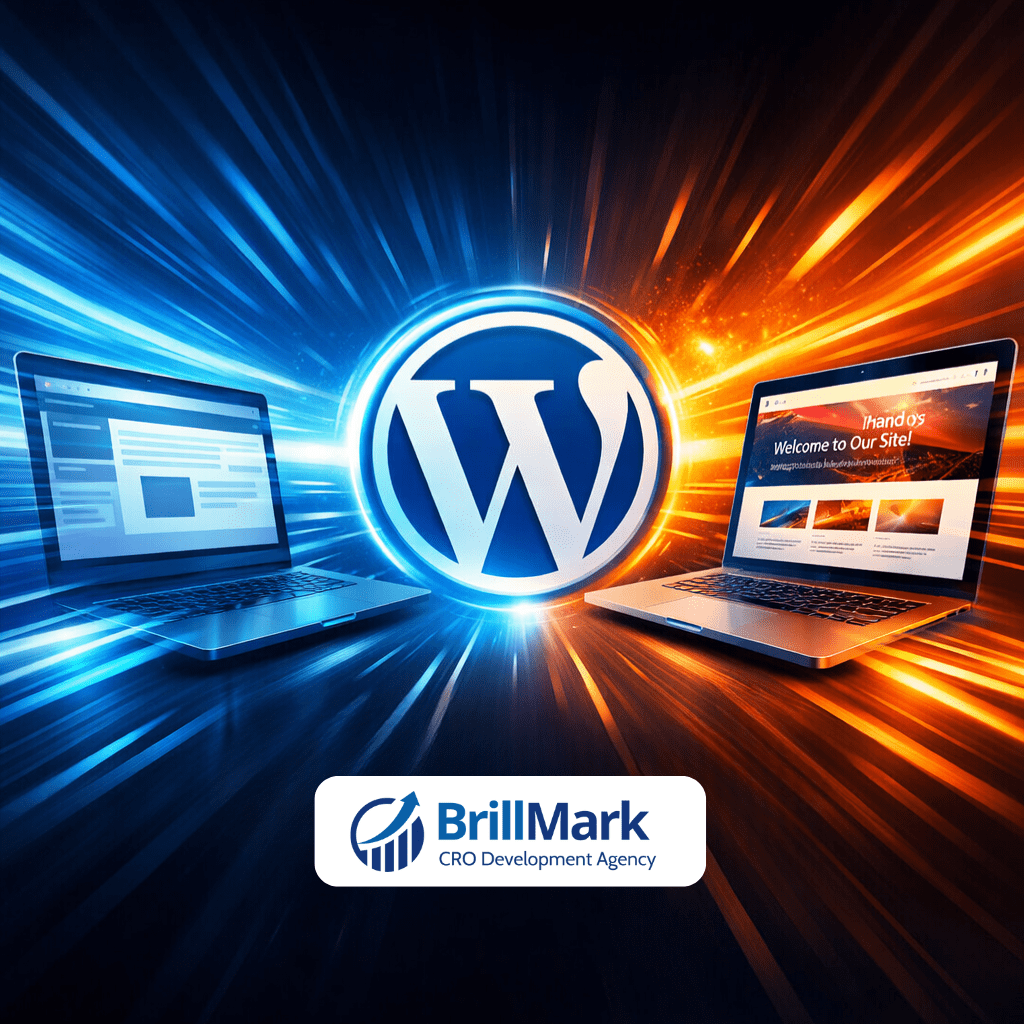
Most people see a WordPress migration as a chore—a risky “lift and shift” where the goal is simply not to break anything. But at Brillmark, we see it differently. A migration is the single best time to strip away the “technical debt” your site has collected over the years. It’s a fresh start.
Think of it like moving to a new house. You wouldn’t move your old, broken furniture and stacks of junk mail, right? You’d declutter first.
When we handle a WordPress migration campaign, our goal isn’t just a successful transfer; it’s a 60–70% boost in speed. Here is how we turn a standard migration into a performance powerhouse.
The Performance-Migration Connection
WordPress site speed directly impacts business outcomes. Research by Google shows that as page load time goes from 1s to 3s, the probability of bounce increases by 32%. For an e-commerce site generating $100,000 daily, a 1-second delay translates to roughly **$2.5 million in lost annual revenue**.
Why Speed Matters Post-Migration
- SEO Rankings: Google’s Core Web Vitals are now primary ranking factors. Sites with excellent performance metrics receive preferential treatment.
- User Experience: 53% of mobile users abandon sites taking longer than 3 seconds to load.
- Conversion Rates: Amazon found that every 100ms improvement in load time increased revenue by 1%.
- Competitive Advantage: In crowded markets, speed is a differentiator.
1. The “Health Check”: Metrics That Actually Matter
Before touching a single file, you need a baseline. We focus on Google’s Core Web Vitals through a business lens.
| Metric | What it actually is | The “Sweet Spot” |
| LCP | How fast the “main” part of your page shows up. | Under 2.5s |
| FID/INP | How quickly the site reacts when a user clicks. | Under 100ms |
| CLS | Does the “Buy Now” button jump away unexpectedly? | Under 0.1 |
Pro Tip: Don’t just rely on “Synthetic” tests. Use Real User Monitoring (RUM) data to see how your site performs for a person on a three-year-old Android phone on a 4G connection. That’s the real test.
2. Choosing Your Foundation (Hosting & Infrastructure)
Your host is the engine of your car. During our infrastructure audits, we look for:
- Server-Level Caching: If your host doesn’t offer Redis or Object Caching, you’re already behind.
- The PHP Factor: We still see sites running on PHP 7.4. Moving to PHP 8.2 or 8.3 often improves execution time by 30%.
- HTTP/3 Support: The latest web protocol handles multiple requests much better than the old versions.
3. The “Spring Cleaning”: Database Optimization
Over the years, WordPress databases become a graveyard of old plugin settings and thousands of post revisions. At Brillmark, we don’t just export and import; we scrub.
- Limit Post Revisions: We cap revisions at 3 or 5 to prevent database bloat.
- Table Indexing: For high-traffic WooCommerce stores, we add custom indexes to the wp_options table so the database finds data in milliseconds.
4. Front-End Polishing: Solving the “Weight” Problem
Images usually make up about 60% of a page’s weight.
- Next-Gen Formats: We convert assets to WebP or AVIF. They look identical but are significantly lighter.
- The “Lazy” Strategy: We implement Lazy Loading so the browser only loads what the user can see.
- Code Surgery: We look for “Render-Blocking” scripts and move them to the footer or load them asynchronously.
5. Why the “Brillmark Approach” Works
We’ve been in the WordPress trenches for over a decade. Our migration process isn’t a “set it and forget it” service.
Our Post-Migration Ritual:
- 48-Hour Watch: We monitor server logs for 404 spikes immediately after launch.
- Warm the Cache: We “prime” the cache so the very first visitor gets a lightning-fast experience.
- Continuous Tuning: We provide a 30-day monitoring window to ensure your site handles traffic spikes gracefully.
Essential Monitoring Tools
- Google Search Console: For real-world Core Web Vitals.
- New Relic: For server-side PHP bottlenecks.
- Query Monitor: A WordPress-specific tool for identifying slow database queries.
The Bottom Line
A slow site is a leaky bucket—you’re pouring money into marketing, but the customers are falling out through the holes of a 5-second load time.
Ready to move to a faster future?If you’re planning a move, don’t just migrate—evolve. Check out our case studies to see how we’ve transformed site speeds for brands like yours.
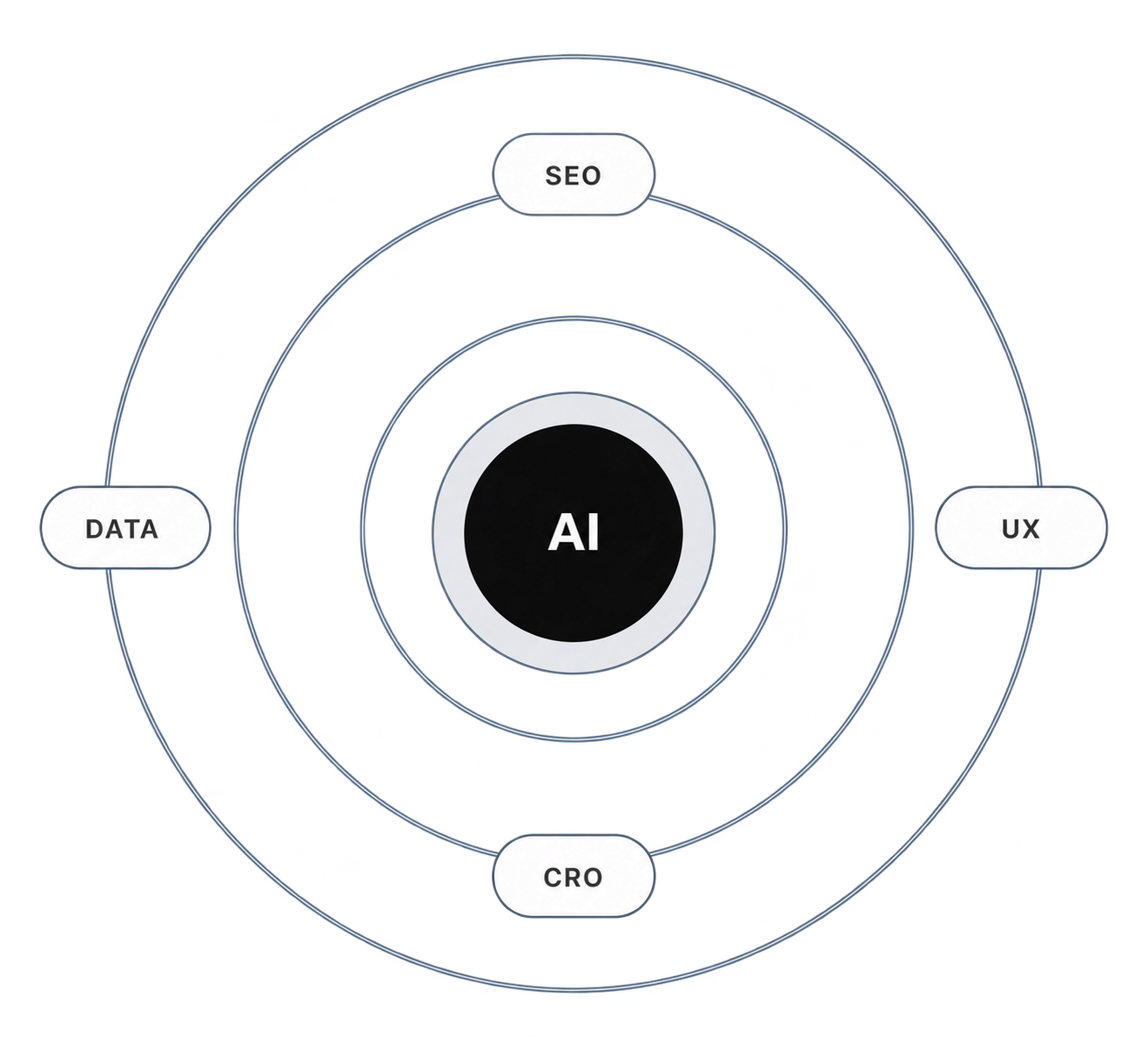
Make your website ready for the AI era.
AI is changing how people discover, evaluate, and interact with websites. We help you identify optimization opportunities across content, UX, technical performance, SEO, and conversion paths.