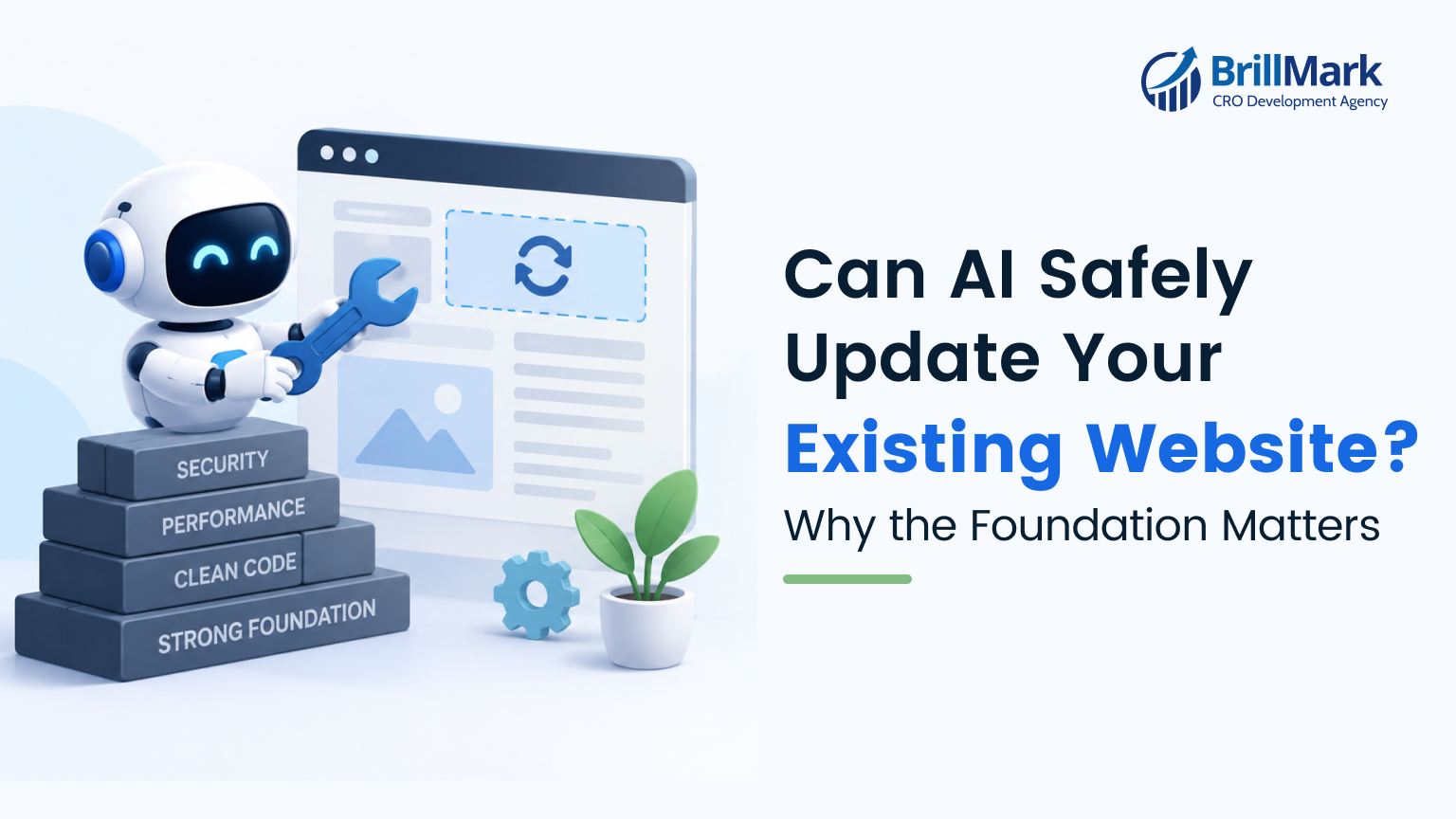
AI can write content, generate code, and create a new webpage quickly. But making changes to an established business website is more complex.
A website is made up of connected elements, including its theme, plugins, forms, tracking tools, and custom code. A change in one area can affect another. For AI to help reliably, it needs to work within a website that is clearly structured and properly understood.
Can AI help update an existing website?
- Yes, AI can help update an existing website, but only when the website’s structure is well documented.
Is there any risk that comes from converting a website with the help of AI?
- Yes, without monitoring, experience, and documentation of proper themes, plugins, forms, tracking, and custom code that interact in non-obvious ways. This is risky for an existing website’s performance.
What are the safer paths to convert a website with AI?
- The safer path pairs AI-assisted analysis and development with human review before anything goes live.
First step to generate a page with AI.
AI can produce a page design or code, but that does not guarantee it will work with your existing website. The page still needs to match your brand, work with your forms and integrations, display correctly on different devices, and fit your WordPress setup.
Bug fixes require the same care. AI needs to understand how the affected feature works and what else might depend on it before suggesting or making a change.
Why does AI need a well-structured website to make safe updates?
Over time, websites often accumulate new pages, plugins, custom code, and tracking tools. Different people may have worked on the site, and documentation may be incomplete. As a result, it can be difficult to see how all the pieces connect.
Without that context, even a small update can create unexpected problems. AI may help identify an issue, but making a reliable change requires understanding the website as a whole.
The right way to let AI update a live WordPress website
A well-organized website is easier for both people and AI to understand. Its key features are documented, its design is consistent, and its pages are built from components that can be reused.
For WordPress, reusable sections, sometimes called panels, can provide a practical foundation. Designed for the website’s brand, these sections can be combined to create new pages while maintaining a consistent look and feel.
This structure also helps developers identify where changes belong. AI can assist with analysis and development, while a reviewer checks the work before it goes live.
Signs a site is hard for AI or anyone to update safely:
- Multiple developers have touched the site over time with little handoff documentation
- Plugins or custom code were added without a record of what they affect
- Pages were built ad hoc rather than from consistent, reusable components
- No staging environment exists to test changes before publishing
- Tracking and analytics tags were added incrementally with no central inventory
Review the website carefully before starting AI conversion
AI can speed up website work, but changes should still be tested before launch. A careful process includes:
- Reviewing the website’s pages, theme, plugins, and key features.
- Identifying the requested change and checking what it may affect.
- Making the update within the website’s structure.
- Testing it on a staging site, including important pages, forms, and mobile layouts.
- Approving the change before publishing it.
This lets businesses benefit from AI-assisted work while maintaining oversight of their live website.
Traits of an AI-ready WordPress setup:
- Key features and integrations are documented in one place
- Pages are built from a consistent library of reusable, branded sections (panels)
- Design and naming conventions are consistent across templates
- Custom code changes are tracked and attributed to a specific purpose
How to know if your website needs rebuild?
Not every older website needs to be rebuilt. If the site is well understood and has a few isolated issues, targeted repairs may be enough.
A restructure or rebuild may be worth considering when the website is difficult to maintain, pages have become inconsistent, or new features require extensive custom development. The right choice depends on the current site and the changes the business needs to make.
The aim is a website that is easier to understand, improve, and test—whether that calls for focused repairs or a broader rebuild.
Quick self-check:
- Targeted repairs are usually enough if the site is well understood and issues are isolated
- A rebuild is worth considering if the site is difficult to maintain, pages are inconsistent, or new features require heavy custom development
- A structured WordPress foundation sits between the two. It fixes the “hard to understand” problem without necessarily requiring a full rebuild
The aim is a website that is easier to understand, improve, and test. Whether that calls for focused repairs or a broader rebuild.
Let’s Optimize Your Website Faster, With a Process You Can Trust
AI can help teams analyze and develop websites faster, but it works best when the website has a clear foundation. A structured WordPress system can make it easier to create pages, maintain consistency, and review updates.
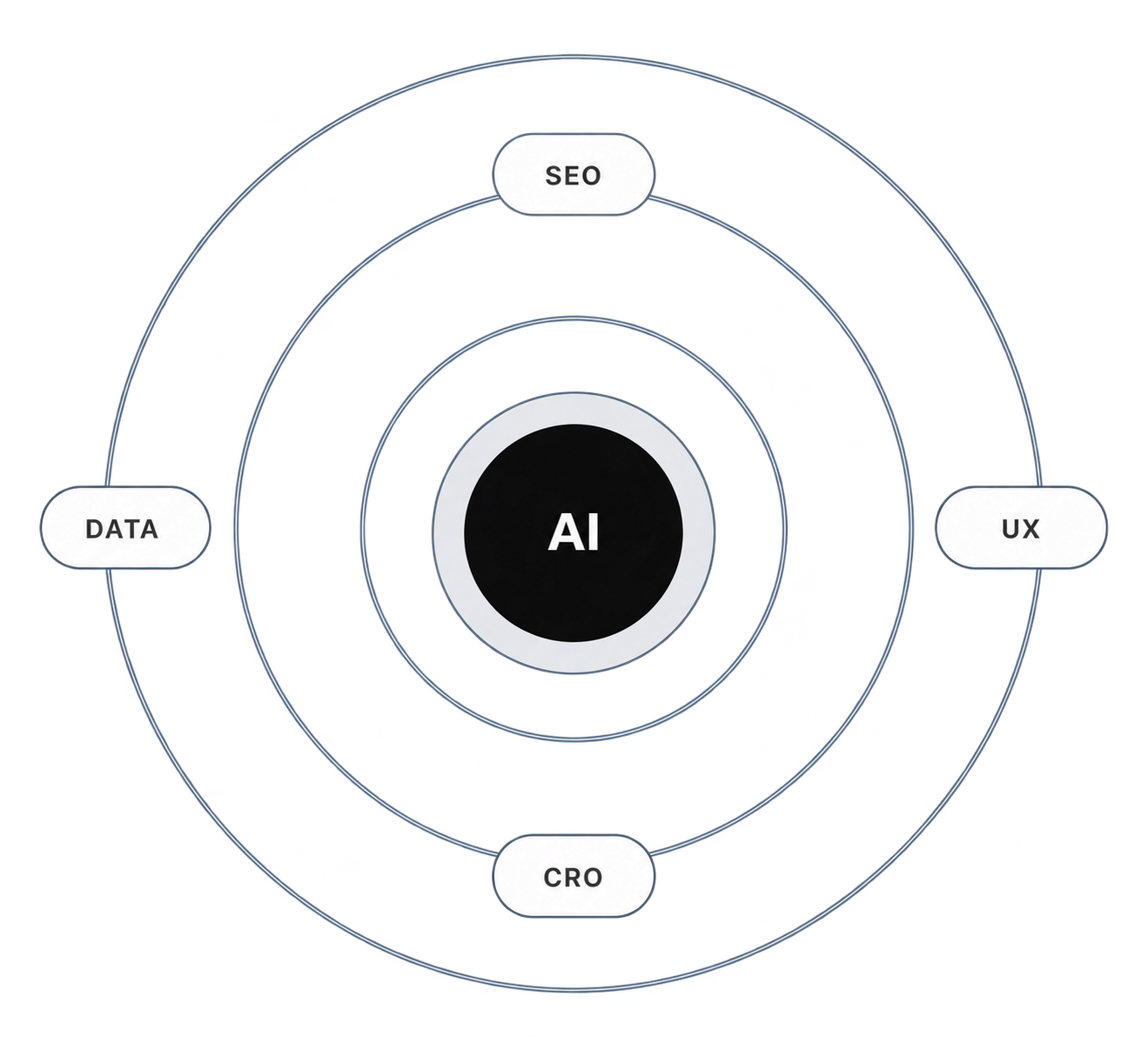
BrillMark’s AI Website Optimization service combines AI-assisted analysis and development with CRO, UX, and engineering expertise. The process starts with an assessment of the existing website and can lead to a structured WordPress system, with changes reviewed on staging before launch.
Not sure whether your website needs repairs or a more structured foundation? Explore BrillMark’s AI Website Optimization service.
Make your website ready for the AI era.
AI is changing how people discover, evaluate, and interact with websites. We help you identify optimization opportunities across content, UX, technical performance, SEO, and conversion paths.