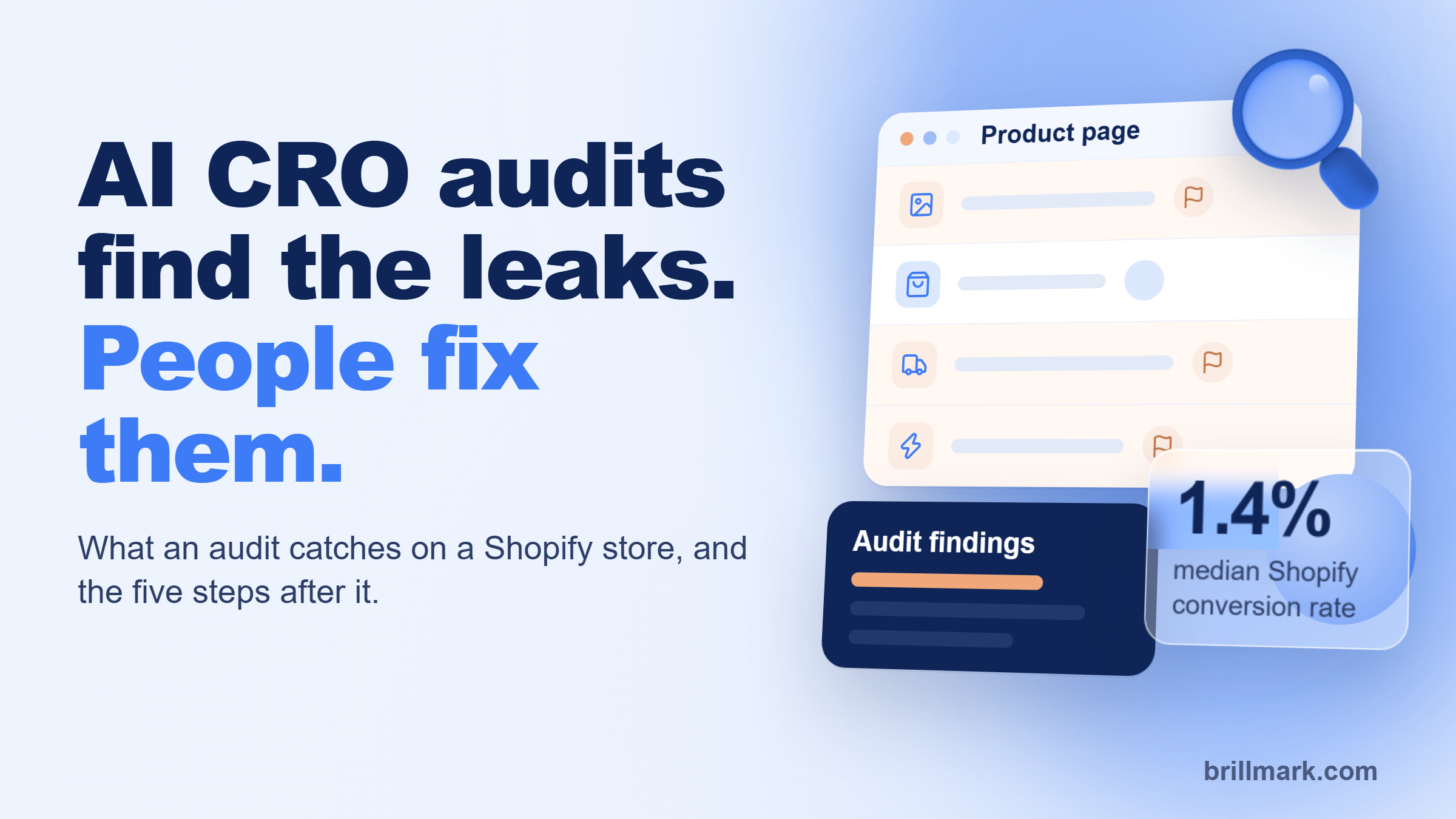
The mediam shopify store converts 1.4% of its sessions into orders. The top 10% convert more than 3.6% ( Little data benchmark, 427 shopify stores, July to October 2026). Ask most founders what’s wrong with their product page, and they can name three things on the spot.
Finding the problems is rarely what holds a store back. Fixing them and proving the fix worked is. An AI CRO audit is good at the first part and says nothing about the rest.
Quick Synopsis of an AI CRO Audit?
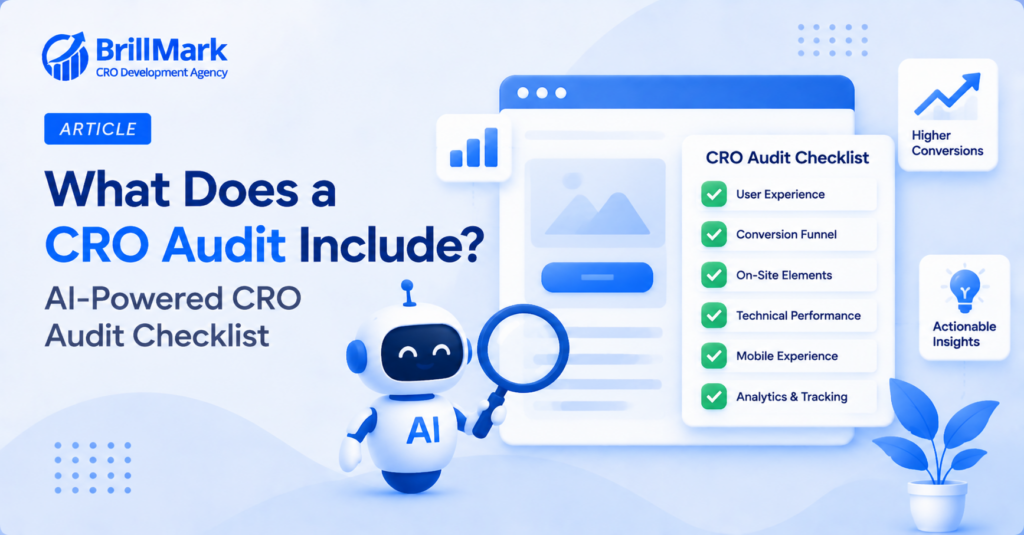
An AI CRO audit uses AI agents to scan your store’s pages against known conversion principles and flag where shoppers are likely to hesitate or leave. CRO stands for conversion rate optimization: getting more of the visitors you already have to buy. A good audit has a person review the agents’ list before it reaches you, because raw machine output mixes real problems with noise.
A typical Shopify CRO audit checks:
-
- product pages: unclear photos, missing sizing or shipping details, buried reviews
-
- calls to action: an Add to cart button that’s weak or hidden
-
- mobile layout: small tap targets, popups that block the page
-
- speed: heavy images, app scripts loading where they aren’t used
-
- checkout: surprise costs, forced account creation
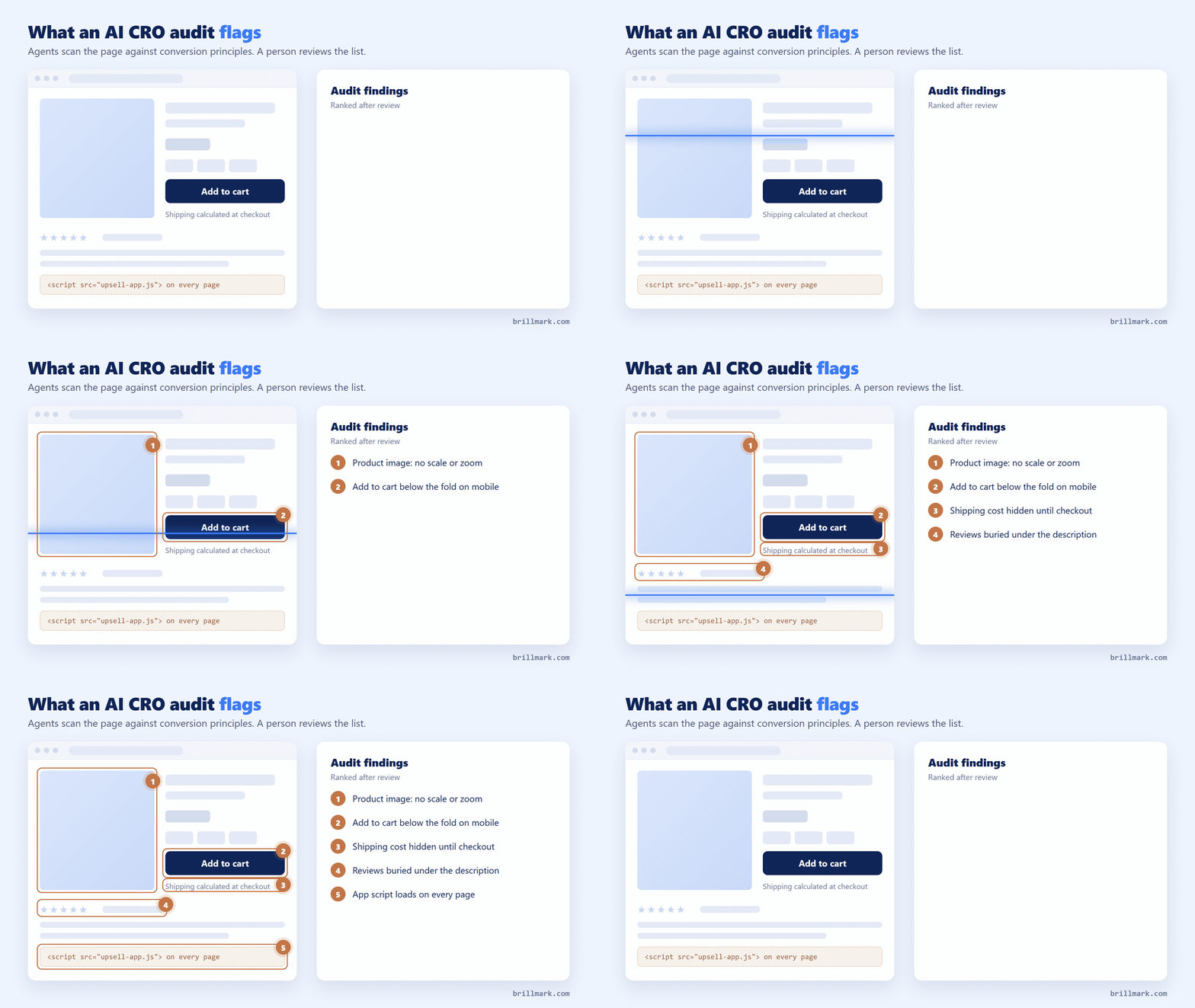
An AI CRO audit is a fast, cheap first look: it tells you where to point your attention, not what to do about it.
Why Shopify Conversion Optimization Stalls Without a CRO Team
Most stores in the $1M to $15M range don’t have a strategy problem. They have an execution problem:
-
- Traffic goes up, conversions stay flat, and nobody can say where visitors drop off.
-
- One marketer runs email, ads and the inventory sheet, so CRO is always next quarter’s project.
-
- Every upsell widget adds scripts. Some help. Some quietly slow your mobile pages.
- GA4 and shopify report different numbers, and you’re not sure which change made money.
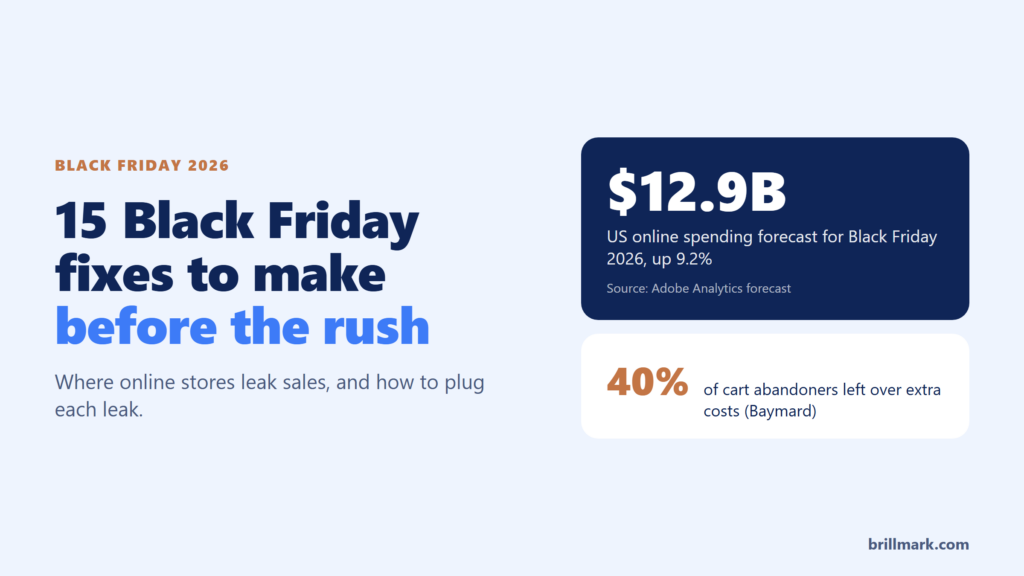
The audit’s list will probably echo what shoppers say when they abandon a checkout. Across 50 studies, Baymard Institute puts cart abandonment at 70.22%, and when it asked US shoppers why they left, 40% named extra costs such as shipping and tax (Baymard Institute).
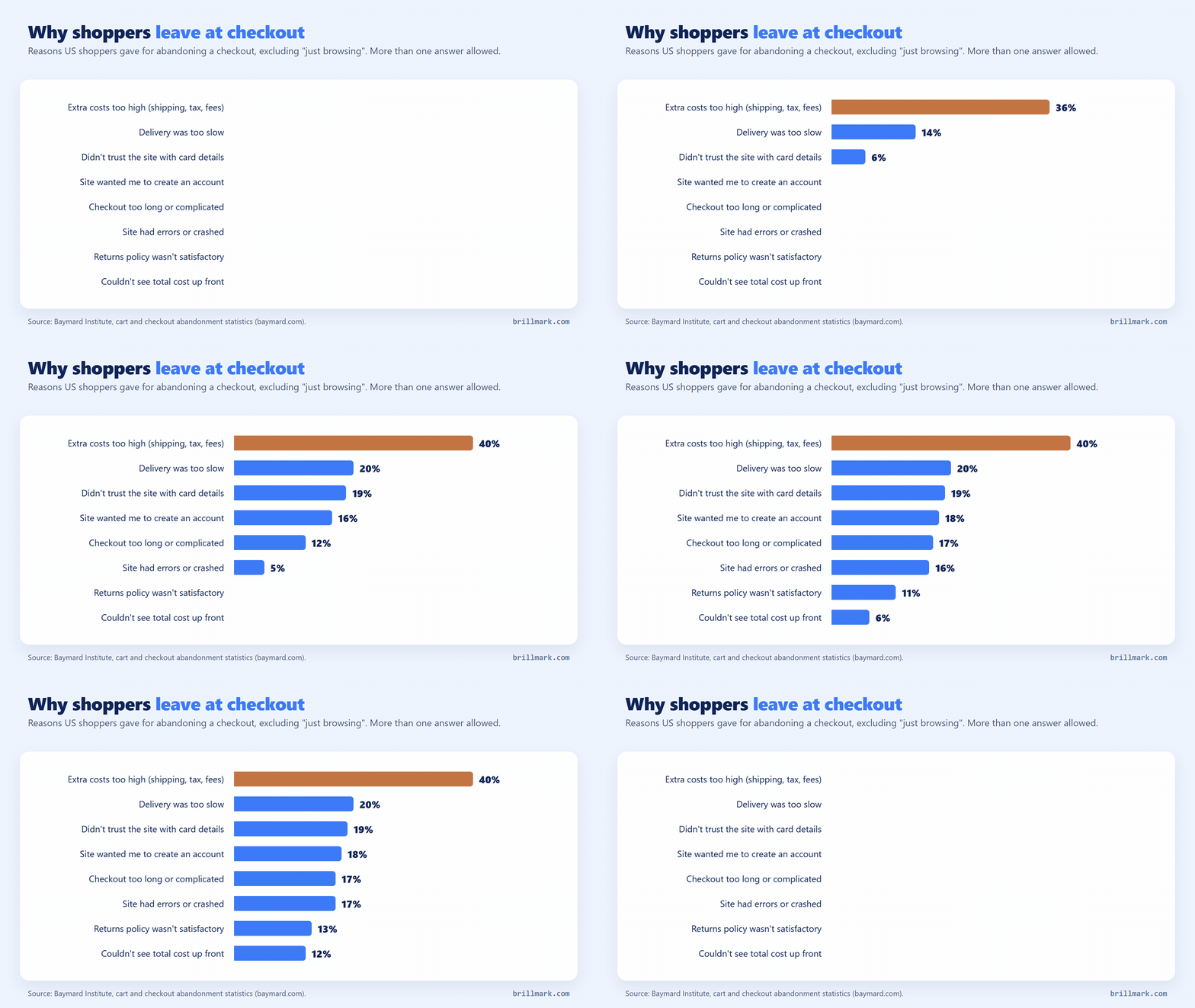
Most of the reasons on that chart are things a store can change this month; the hard part is choosing which one first and building it properly.
What an AI CRO audit can’t tell you
An automated audit can’t tell you four things, and they decide whether any money comes back:
-
- Which issue costs you the most. Twenty findings all marked “high” is a to-do list with no order.
-
- How to build the fix in your theme without breaking a variant selector or a subscription app.
- Whether your tracking can measure the change.
- Shopify itself explains why its numbers and Google Analytics’ differ: reloads, bots, blocked cookies and time zones are counted differently (Shopify Help Center).
Whether it worked, three months later, against a starting number you trust.
Speed shows the gap. In a Google-commissioned study by 55 and Deloitte across 37 brand sites, a 0.1-second faster mobile site went with 8.4% more retail conversions (web.dev). An audit will flag a slow app. It won’t tell you whether that same app drives your upsells. An audit sees the page; it can’t see your margins, your tracking or your history, and those decide what to fix first.
TheShopify CRO process: Map, Sort, Baseline, Build, Prove
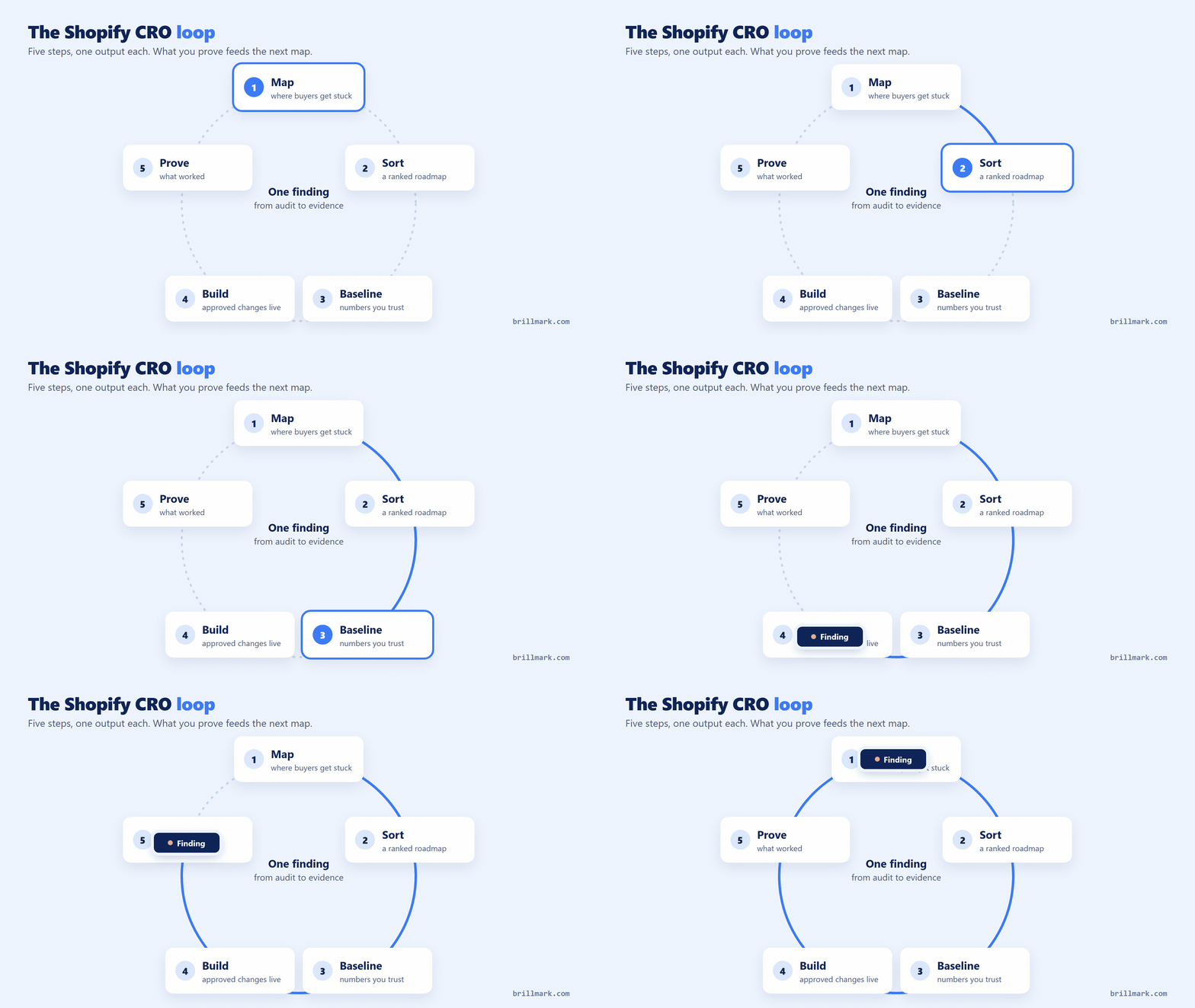
The audit is the first step of a loop. Each step has one output:
Map: talk to the founder, then read
- Shopify data, GA4, installed apps and reviews. Output: where the store loses buyers, and why.
- Sort: decide what to do with each finding. Output: a short, ranked roadmap instead of a 60-item wishlist.
- Baseline: check the tracking, then record conversion rate, revenue per visitor and add-to-cart rate. Output: a starting point you trust.
- Build: ship fixes and A/B tests in your existing theme, QA’d on real devices and speed-checked. Output: approved changes, live.
- Prove: compare against the baseline monthly, with fuller reviews at three and six months. Output: what worked, which feeds the next Map.
Sort is where most of the value is. Every finding goes into one of four groups:
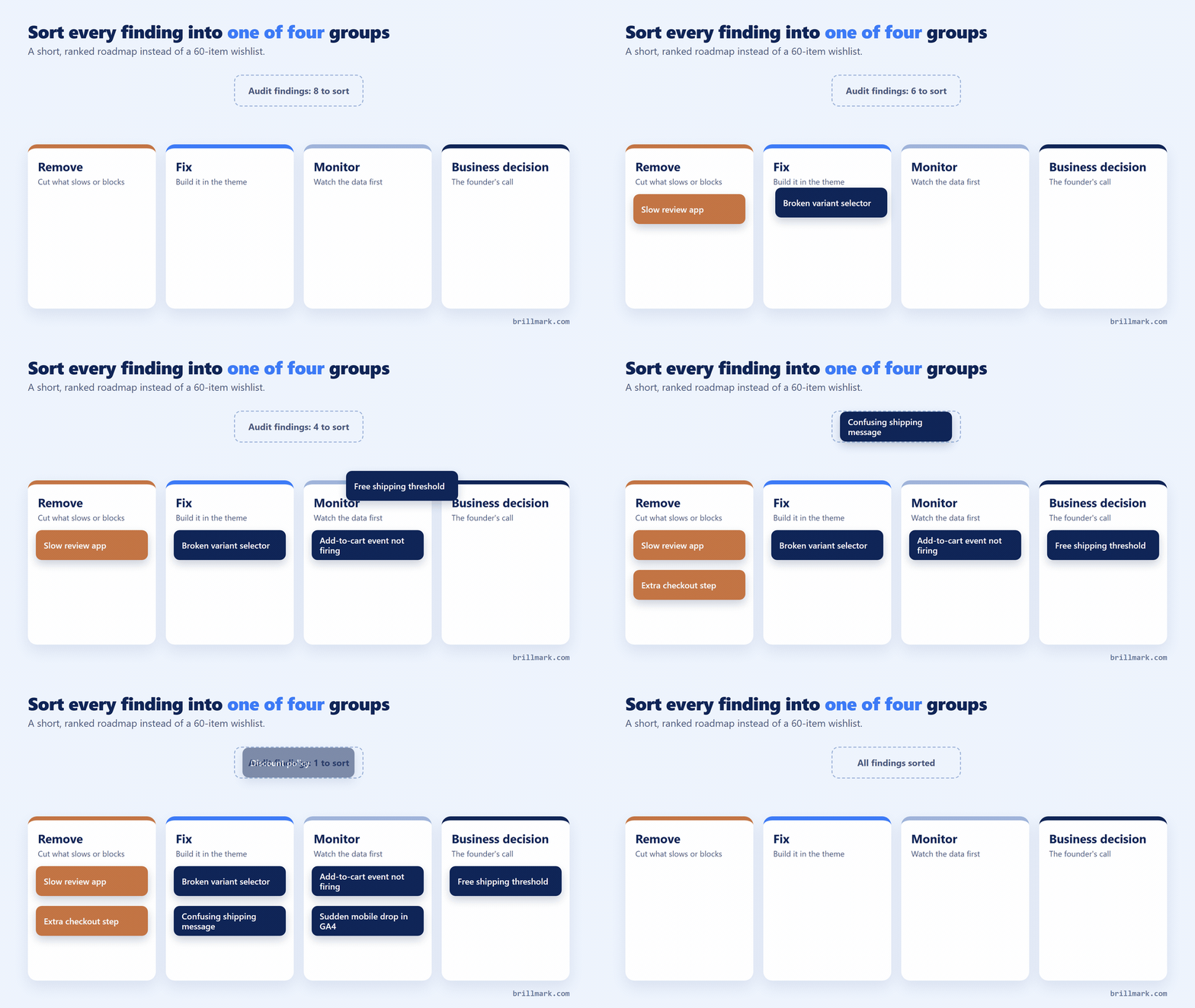
Some of the best CRO changes are removals, and some findings aren’t CRO at all: they’re pricing and offer decisions only the founder can make.
Who does what: AI agents and the people reviewing them
AI-powered CRO works when the agents do the scanning and a person makes every call that costs money.
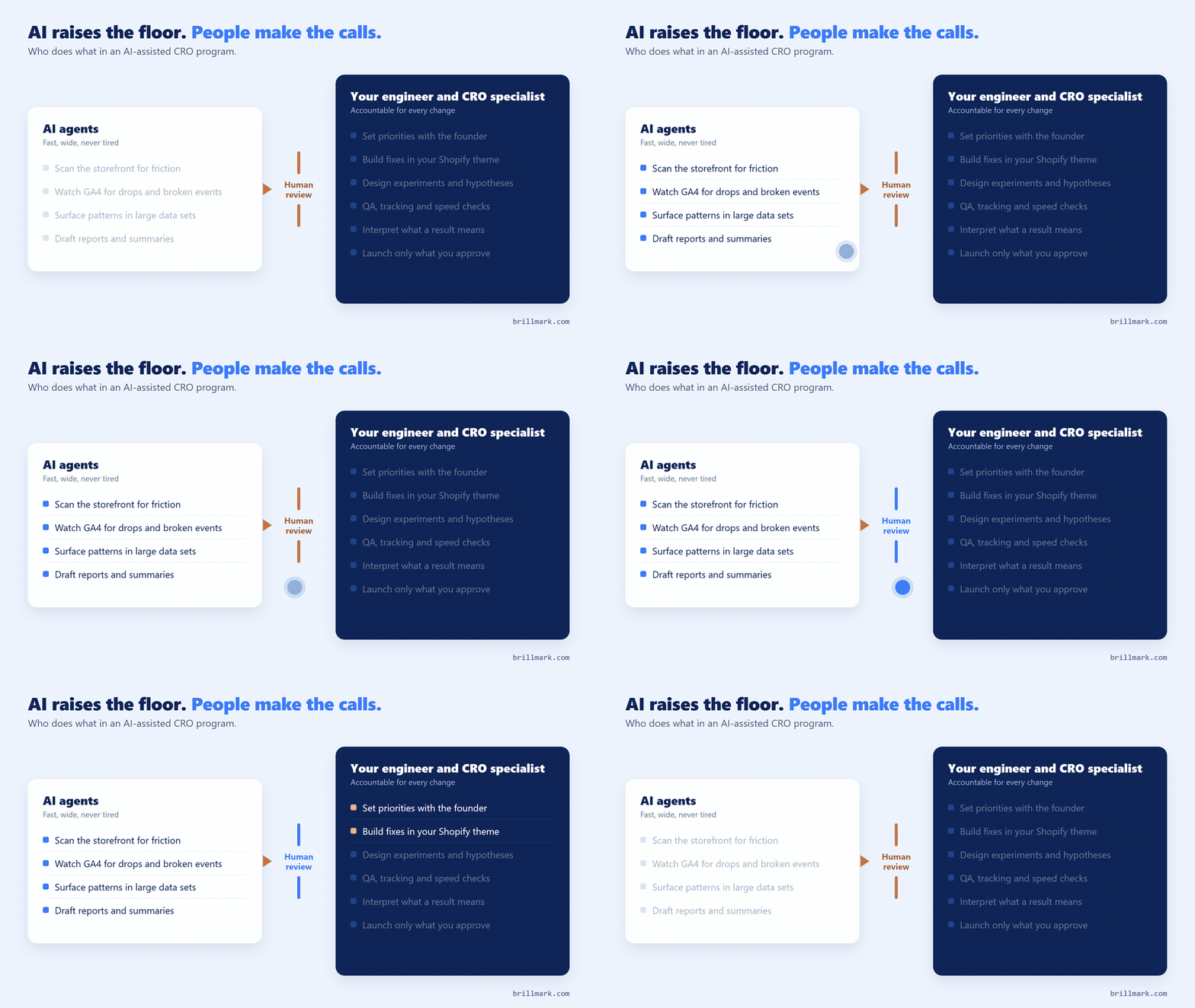
AI raises the floor. Judgment is still what you’re paying for. That split is how we run Agentic CRO at BrillMark: the agents make the first look fast, and an engineer who knows your store decides what’s worth building. No AI system can guarantee a conversion lift, and anyone who promises one is guessing.
Shopify A/B testing: when you have the traffic, and when you don’t
An A/B test shows half your visitors the current page and half a changed one, then compares which converts better. It’s the cleanest proof there is, but it needs visitors. We calculated how many a page converting at the 1.4% median needs on each version:
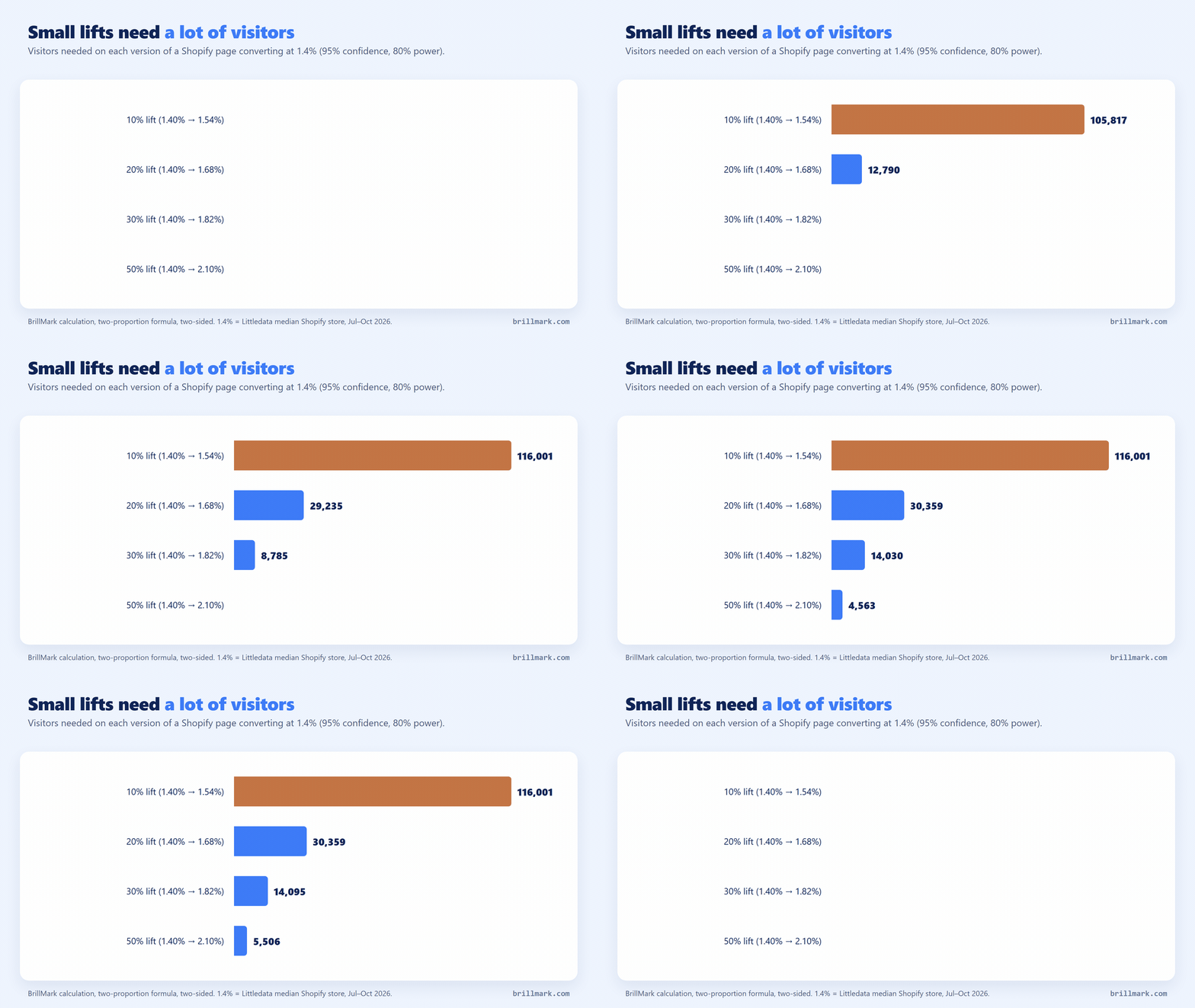
To spot a 10% lift, from 1.4% to 1.54%, you need about 116,000 visitors per version. If a page can reach that in two to four weeks, test it. If not, ship the high-confidence fix and compare before and after against your baseline. Low traffic doesn’t rule out CRO; it rules out small, slow A/B tests.
Apps, freelancers or a CRO program
Most growing shopify brands use a mix of apps, freelancers and instinct. None adds up to a program on its own.
|
|---|
The difference isn’t the tools; it’s whether one person owns the plan, the build and the result.
FAQ
What is an AI CRO audit? A scan of your store by AI agents that flags conversion friction such as unclear product pages, weak calls to action, mobile layout issues and slow elements. The useful ones have a person review and rank the findings before you see them.
Will CRO changes slow my shopify store? They can, if each one adds an app or a script. Check speed on every change before launch. Many audits end up recommending removing apps rather than adding them.
Do I need a new CRO platform? Usually not. Most fixes and many A/B tests can be built in your existing shopify theme and tools.
Can anyone guarantee higher conversions? No. A sound process (checked tracking, ranked priorities, QA’d builds, honest reporting) raises your odds. It doesn’t guarantee a number.
Not sure where your shopify store loses buyers? BrillMark runs AI-assisted, human-reviewed CRO audits and builds the fixes in your existing theme. Get a free AI CRO audit: a one-page report with five conversion opportunities, reviewed by a CRO strategist, with no credit card or tracking access needed.
Make your website ready for the AI era.
AI is changing how people discover, evaluate, and interact with websites. We help you identify optimization opportunities across content, UX, technical performance, SEO, and conversion paths.